Restaurants for Sale in Vancouver, BC
Buying an established restaurant lets you skip the longest part of opening here: a new build can spend many months in permitting, construction and health approval before it serves a single plate. Browse the cafés, sushi bars, pizza shops, bistros and licensed restaurants for sale in Vancouver below. Under the listings, our buyer's guide covers what's specific to this city: how each neighbourhood trades, which City and health permits change hands (and which don't), what Vancouver leases really cost, and the questions to ask before you make an offer.
Showing 1 - 12 of 325 Results
Why Buy an Established Restaurant for Sale in Vancouver, British Columbia?
Written by David Turner, M.A.
Vancouver's dining scene is growing in reputation and in visitors, but it is expensive to operate in. Buyers who understand both sides price their offers better.
|
Indicator |
Latest figure |
Why it matters to a buyer |
|---|---|---|
|
MICHELIN Guide Vancouver 2026 |
72 restaurants recognized: 11 starred (AnnaLena became the city's first two-star), 16 Bib Gourmand, 45 recommended |
International food tourists now plan trips around Vancouver restaurants, which helps mid-range and fine dining alike |
|
Cruise season 2026 |
358 ship calls and about 1.4 million passengers (February to October), a record and up about 18% on 2025 |
Strong spring-to-fall traffic downtown, in Gastown and around Canada Place |
|
Dine Out Vancouver 2026 |
24th season, January 21 to February 8, with about 450 participating restaurants |
Fills seats in the slowest weeks of the year |
|
Storefront vacancy |
9.4% citywide in 2026, down from 10.2% in 2025 (City target: 5 to 7%) |
Vacancy is improving, but some blocks still struggle, so foot traffic varies street by street |
|
BC minimum wage |
$18.25 per hour since June 1, 2026, with the same rate for liquor servers |
Labour is usually a restaurant's highest cost |
What this means for buyers: demand is strong, but margins are thin. The best Vancouver acquisitions pair a good location with a lease and a cost structure that still work in January.
more
Key Steps & Information When Buying a Restaurant for Sale in Vancouver, BC
In Vancouver, two restaurants with identical sales can be worth very different amounts because of the block they sit on. Here's how the city's main dining areas trade, and what to check in each.
Downtown and Coal Harbour
Downtown runs on office workers from Monday to Friday, hotel guests every day, and big crowds before Canucks games and concerts at Rogers Arena and BC Place. Lunch, grab-and-go and quick-service concepts do well here, and spots near the Vancouver Convention Centre and Canada Place pick up cruise passengers from spring to fall. Ask for weekday versus weekend sales, because some office blocks go quiet on Saturdays and Sundays.
Gastown
Gastown mixes tourists, cocktail bars and chef-driven restaurants inside heritage buildings. It's one of the city's best-known dining streets and benefits directly from the cruise terminal next door. Heritage buildings can limit what you can change, from ventilation and exhaust to signage and storefronts, so confirm with the landlord and the City what renovations are allowed before you price in a refresh.
Chinatown
Chinatown has long-running family restaurants, bakeries and newer independent rooms, and some listings here are older businesses whose owners are retiring. That can mean fair prices and loyal customers, but also older kitchens. Budget for equipment and building upgrades, and check how much foot traffic the block actually gets in the evening.
Yaletown
Yaletown is upscale: brick warehouse patios, condo towers full of residents, and a strong evening and weekend crowd. Rents are among the highest in the city, so the key test is whether sales comfortably cover the lease. Patios are a big part of the value here, so make sure the patio permit is current.
West End (Davie and Denman)
The West End is one of the densest residential neighbourhoods in Canada, which makes it good for neighbourhood regulars, brunch, casual dining and takeout. Denman Street also gets beach and Stanley Park visitors in summer. Smaller, walk-in-driven businesses are common here, and many are priced within reach of first-time buyers.
Kitsilano (West 4th and West Broadway)
Kitsilano is health-focused and family-friendly, known for cafés, brunch, plant-based menus and patios. Summer brings beach traffic from Kits Beach, but winters are quieter, so compare monthly sales across the whole year. Construction for the Broadway Subway has affected parts of West Broadway, so ask how sales held up during it.
Mount Pleasant and Main Street
Main Street is Vancouver's hub for independent cafés, craft breweries, natural-wine bars and new concepts. Rents are usually lower than downtown and customers are loyal to independents. It's a strong fit if you plan to rebrand or bring your own concept into an existing space.
Commercial Drive
"The Drive" has Italian cafés, family-run restaurants and a strong community identity, with events that bring big crowds in summer. Many businesses here have long sales histories, which makes due diligence easier. It's a good place to find a well-priced business with established regulars.
Fairview, South Granville and Cambie
These areas mix medical offices around Vancouver General Hospital, retail and nearby homes, giving steady daytime and evening business. Broadway has been closed to vehicles between Cambie and Alberta streets for restoration until about January 2027, and the Broadway Subway is scheduled to open in fall 2027. A restaurant bought near a future station now may gain foot traffic once the line opens, but confirm the lease doesn't include a redevelopment clause.
Kerrisdale, Dunbar and Marpole
These west-side residential neighbourhoods have older, wealthier customers and steady repeat business. They're quieter than downtown but also more stable. Marpole, near the airport and the Canada Line, has a strong mix of Asian restaurants and takeout businesses.
Hastings-Sunrise and Renfrew-Collingwood
On the east side, rents are generally lower, and the customer base is diverse. Takeout, delivery-friendly concepts and family restaurants do well. These areas are worth a look if you want a lower purchase price and are comfortable building sales over time.

Vancouver Licences and Permits: What Transfers and What Doesn't
When you buy a restaurant in Vancouver, some approvals can be transferred to you, and some must be applied for again. Make your offer conditional on the ones that matter, and build the approval time into your closing date.
City of Vancouver business licence
The City allows a business licence to be transferred to a new owner, but only if the new business is the same type as the old one. An existing restaurant licence can only go to another restaurant. A licence can be transferred only once per calendar year. The process has three steps: submit the transfer form, get zoning, building and licence approvals, and pay the fees. If you plan to change the concept, for example from a café to a licensed bar, expect a new application and possibly a change-of-use review.
Vancouver Coastal Health food service permit
Vancouver Coastal Health (VCH) requires every restaurant, takeout and caterer to hold a valid annual food service permit, and this permit does not transfer to a new owner. As the buyer you apply in your own name. You'll need to submit an application form, the menu, a food safety plan and sanitation plan, a FOODSAFE Level 1 certificate (or equivalent), and a certificate of incorporation if you're buying through a company. An Environmental Health Officer may inspect the premises. Ask the seller for recent inspection reports and any outstanding orders before you sign, because problems found later become yours to fix.
Liquor licence (BC Liquor and Cannabis Regulation Branch)
A food-primary or liquor-primary licence can be transferred through the LCRB's Liquor and Cannabis Licensing portal. The application fee is $330, and an expired licence can't be transferred. The restaurant can stay open while the transfer is processed. The seller keeps responsibility for the licence until the LCRB confirms the application is administratively complete. After that, you become the "deemed licensee" and can operate the licence and make changes to it. Make your offer conditional on a successful transfer, and confirm the licence's approved hours, capacity and patio area match how the restaurant actually trades.
Patio permits
Patios are a big part of a Vancouver restaurant's value from spring to fall, but a patio on City sidewalk or street space needs its own City permit. For annual sidewalk patios, the City's published rates include a summer rate (April 1 to October 31) of $75.74 per square metre plus GST, or a year-round rate of $129.77 per square metre plus GST, with application fees and rates varying by location and patio type. In 2026 the City also cut renewal fees for large private patios by 50% and introduced no-fee "storefront seating" for small patios. Ask whether the patio permit is current, whether it's summer-only or year-round, and how many seats it adds.
Grease interceptor (Metro Vancouver Bylaw 365)
Metro Vancouver's Food Sector Grease Interceptor Bylaw No. 365 (2023) requires commercial kitchens to install and maintain a properly sized grease interceptor. Ask for the interceptor's specifications and the cleaning and maintenance records. A missing or undersized interceptor can mean an expensive plumbing job after closing.
Fire safety and building
Ask for recent inspection records for the kitchen hood, exhaust and fire-suppression system, plus fire extinguishers and emergency lighting. If you plan renovations, check early whether they will need a City building permit, especially in heritage buildings in Gastown and Chinatown.
Vancouver Restaurant Leases: Read Them Before You Read the Menu
In Vancouver, the lease often decides whether a restaurant is a good buy. A busy room on a bad lease can be worth less than a quieter room on a good one.
Triple-net leases and property tax
Most Vancouver restaurant leases are triple-net. You pay base rent plus "additional rent": your share of the building's property taxes, insurance, and common-area maintenance. Because commercial property values in Vancouver are high, additional rent can be a large part of the monthly cost. Ask the seller for the total occupancy cost (base rent plus additional rent) for each of the last two to three years, not just the base rent, and look for year-end adjustment bills.
Time left on the lease
Buyers and lenders usually want enough years left, including renewal options, to recover what they pay for the business. A restaurant with one year left and no renewal option is worth much less than the same restaurant with a 5-year term and a 5-year option. If the term is short, negotiate a new lease or extension with the landlord as a condition of your offer.
Assignment and landlord consent
The lease has to be assigned to you, and that almost always needs the landlord's written consent. Landlords may ask for your financial statements, a business plan, a personal guarantee, or a bigger deposit. Start this conversation early, because a slow landlord can delay closing by weeks.
Demolition and redevelopment clauses
Much of Vancouver is being redeveloped, especially along the Broadway corridor under the City's Broadway Plan and near rapid transit stations. Many leases in these areas include a demolition or redevelopment clause that allows the landlord to terminate the lease early upon notice. Read the lease for any such clause, and price the business on the assumption the landlord may use it.
Use clause and exclusivity
Check that the lease's permitted use matches the business you're buying, including liquor service, hours and any patio. If you plan to change the concept, the use clause may need to be updated as well. Some leases also include exclusivity clauses, for example, stopping the landlord from renting a neighbouring unit to another coffee shop. These can add real value.
What It Costs to Run a Restaurant in Vancouver, BC
Before you agree on a price, rebuild the restaurant's costs using today's Vancouver numbers, not the seller's numbers from two years ago.
Wages
BC's general minimum wage rose to $18.25 per hour on June 1, 2026, up from $17.85. BC no longer has a lower liquor-server wage, so servers earn the same minimum, and tips don't count toward it. In practice, Vancouver kitchens often pay cooks well above minimum to keep staff. Check the payroll records against current wage rates and ask which staff are expected to stay after the sale.
Sales taxes on the purchase
When you buy a business in BC, PST applies to the taxable business assets included in the sale, such as kitchen equipment, furniture and point-of-sale hardware. If the seller is registered to collect PST, they must collect and remit it on those assets. Have your accountant decide how the price is split between equipment, goodwill and inventory in the purchase agreement, because the split affects both your PST bill and your future tax deductions.
Delivery apps
BC permanently caps what delivery companies such as Uber Eats, DoorDash and SkipTheDishes can charge restaurants: 15% of the order value for delivery, plus up to 5% for other fees. If a large share of sales comes through delivery, check the platform statements to see what the restaurant actually pays.
Seasonality
Vancouver's year has clear highs and lows. Spring and summer bring cruise passengers (February to October in 2026), tourists, and full patios. November to February is wetter and slower, and Dine Out Vancouver in late January and early February is one of the main ways restaurants fill seats in that period. Ask for monthly sales for at least two full years, and make sure the business can cover rent and payroll in its weakest months.
Other costs to budget for
-
City business licence and VCH permit fees
-
Liquor licence transfer ($330 application fee) if licensed
-
Patio permit fees, if the business has a patio on City property
-
Grease interceptor cleaning and maintenance
-
Hood cleaning and fire-system inspections
-
Insurance (property, liability, and liquor liability if licensed)
-
WorkSafeBC premiums
-
Working capital for the first two to three months after closing
Vancouver Restaurant Due Diligence Checklist
Use this checklist when you review a Vancouver restaurant listing. Ask for each item in writing, and make your offer conditional on reviewing it.
Financial
-
Financial statements and tax returns for the last three years
-
Monthly sales for at least 24 months, to see the summer peak and the winter dip
-
Point-of-sale reports split by dine-in, takeout, delivery app, patio and liquor sales
-
Payroll records, staff list, wage rates and any staff the seller expects to keep
-
Supplier invoices for the last few months, to check food and liquor costs
-
Delivery-platform statements, to see fees and how much of sales they make up
Lease and premises
-
The full lease, all amendments and any renewal options
-
Total occupancy cost, including property tax and common-area charges, for the last two to three years
-
The landlord's written consent to assign the lease
-
Any demolition, redevelopment or relocation clause
-
The permitted use, hours and exclusivity terms
Licences and compliance
-
City of Vancouver business licence, confirming the business type matches yours
-
Recent Vancouver Coastal Health inspection reports and any outstanding orders
-
Liquor licence details from the LCRB: type, hours, capacity and licensed patio area
-
Patio permit, including whether it's summer-only or year-round
-
Grease interceptor specifications and cleaning records
-
Hood, exhaust and fire-suppression inspection reports
Equipment and assets
-
A full list of equipment with age and condition, checked in person
-
Which items are owned and which are leased, such as the dish machine, POS or coffee machine
-
Inventory to be counted on the closing date
-
Website, social media accounts, phone number, recipes and delivery-app accounts included in the sale
How Vancouver restaurants are usually valued
Small restaurants are often priced as a multiple of seller's discretionary earnings (SDE): the profit left for one full-time owner before their own salary. Many smaller restaurant deals fall roughly between 1.5 and 3 times SDE, depending on the lease, the location, and how dependent the business is on the current owner. When a restaurant doesn't make much profit, the price usually comes down to the value of the equipment, the leasehold improvements and the location, which brokers often call an "asset sale" or "key money" deal. In Vancouver, a long lease at a fair rent in a strong neighbourhood can be worth a lot on its own. Get a professional valuation before you make a final offer.
Financing and Local Support for Vancouver Restaurant Buyers
Most buyers combine their own cash with a bank loan, and often some seller financing. These programs and organizations can help.
Canada Small Business Financing Program (CSBFP)
This federal program, offered through Canadian banks and credit unions, lets small businesses borrow up to $1.15 million in total: up to $1 million in term loans and up to $150,000 in lines of credit. Up to $500,000 of the term loan can go toward equipment and leasehold improvements, which make up much of what you buy in a restaurant asset purchase. Ask your bank whether your deal qualifies and how much of the price it can cover.
Futurpreneur
Futurpreneur offers founders aged 18 to 39 up to $75,000 in financing (up to $25,000 from Futurpreneur plus up to $50,000 from BDC), together with a mentor for up to two years. Ask whether your purchase or relaunch qualifies.
Seller financing
Many Vancouver restaurant sellers, especially owners who are retiring, will carry part of the price as a loan paid back over a few years. Seller financing lowers the cash you need at closing and keeps the seller invested in a smooth handover. It often comes with a training period and a non-compete agreement.
Local organizations
-
Small Business BC: advice, workshops and business-plan support for BC entrepreneurs.
-
BC Restaurant and Foodservices Association (BCRFA): industry news, policy updates and networking for BC restaurant owners.
-
Business Improvement Areas (BIAs): most Vancouver shopping streets, including Gastown, Yaletown, Commercial Drive, Mount Pleasant and Kitsilano, have a BIA that runs events, street markets and marketing. Contact the BIA for the area you're buying in to learn about foot traffic, events and upcoming construction.
-
go2HR: BC's tourism and hospitality HR association, with hiring and training resources.
Types of Restaurants for Sale in Vancouver
Vancouver's listings reflect how the city eats. These are the types that come up most often, and what to look for in each.
-
Cafés and coffee shops: a lower purchase price and simpler kitchens. Lease terms and location matter most, since sales depend on foot traffic.
-
Sushi, ramen and Asian restaurants: a big part of Vancouver's market, from small takeout counters to full-service rooms. Check the kitchen equipment and ventilation carefully.
-
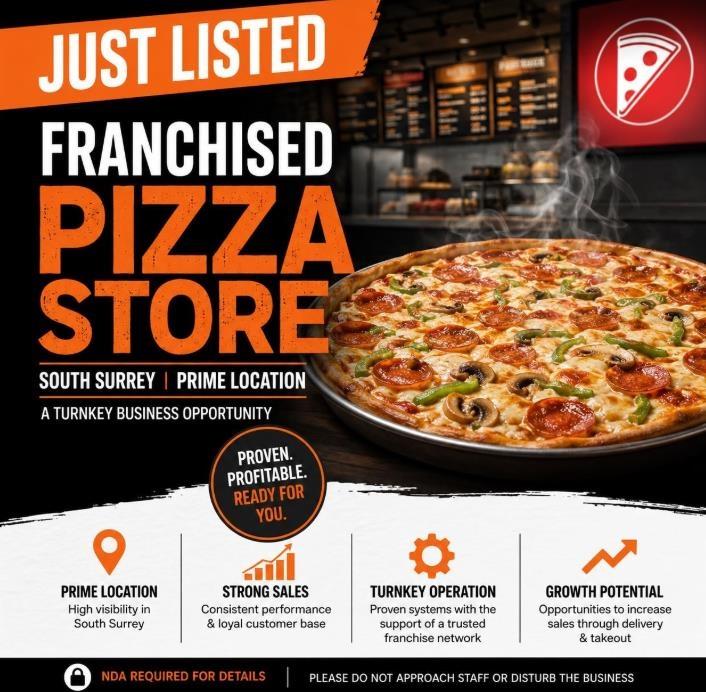
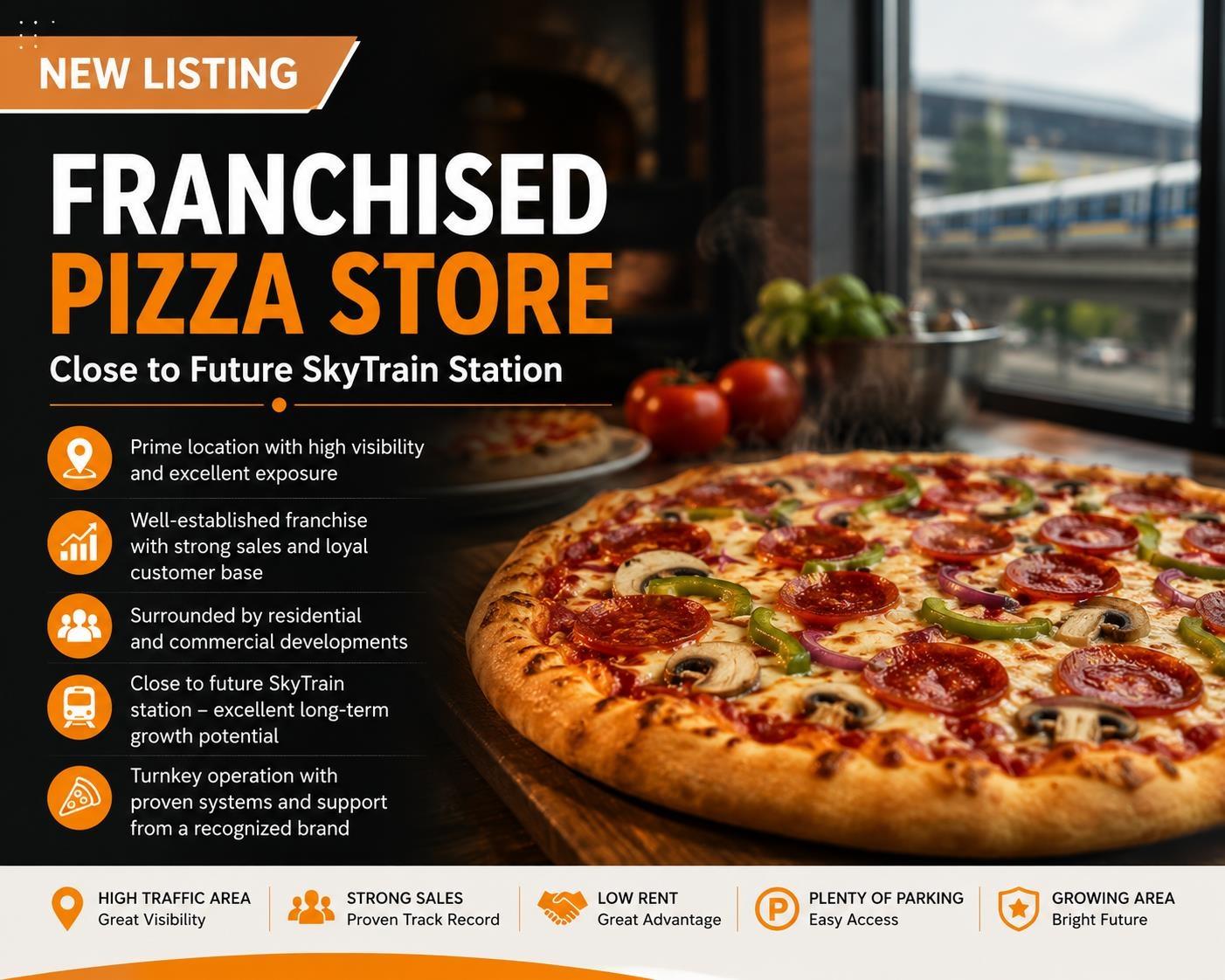
Pizza and quick-service: often strong in takeout and delivery. For franchises, confirm the franchisor approves you and how much the transfer fee and renovation requirements cost.
-
Brunch and breakfast restaurants: very popular in Kitsilano, the West End and Main Street. They often close by mid-afternoon, which can mean lower labour costs.
-
Bubble tea and dessert shops: smaller spaces with lower set-up costs. Check how trend-driven the sales are.
-
Licensed restaurants and bars: a liquor licence adds value but also responsibility. Allow time for the LCRB transfer and confirm the licensed hours and capacity.
-
Fine dining: with the MICHELIN Guide now in Vancouver, a well-known room can attract visitors from around the world, but equipment, staff and expectations are all more expensive.
Looking Beyond the City of Vancouver, BC?
If you're open to other parts of the region, see all restaurants for sale in British Columbia, including listings in Burnaby, Richmond, Surrey, North Vancouver, Victoria and the Okanagan. Neighbouring cities often have lower rents and are served by different health authorities (Fraser Health covers Burnaby and Surrey), so the permit steps can differ from the ones on this page.
Frequently Asked Questions:
Can I transfer a Vancouver restaurant's business licence to my name?
Yes, if you keep the same type of business. The City of Vancouver lets a restaurant licence transfer only to another restaurant, and only once per calendar year. You submit a transfer form, get zoning, building and licence approvals, and pay the fees.
Does the Vancouver Coastal Health permit transfer when I buy a restaurant?
No. VCH's annual food service permit doesn't transfer to a new owner. You apply in your own name with a menu, food safety and sanitation plans, and a FOODSAFE Level 1 certificate, and an Environmental Health Officer may inspect the premises.
How do I transfer a liquor licence in Vancouver?
Apply through the BC Liquor and Cannabis Regulation Branch's online licensing portal. The fee is $330 and the licence must not be expired. The restaurant can stay open during the transfer, and you become the deemed licensee once the LCRB confirms the application is administratively complete.
Which Vancouver neighbourhoods are best for buying a restaurant?
It depends on your concept. Downtown suits lunch and quick-service, Gastown and Yaletown suit licensed and higher-end dining, Kitsilano and the West End suit brunch and cafés, and Main Street and Commercial Drive offer lower rents with loyal local customers.
How much does a restaurant patio permit cost in Vancouver?
The City's published annual sidewalk patio rates include $75.74 per square metre for summer (April 1 to October 31) or $129.77 per square metre year-round, plus GST, with fees varying by location and patio type. Small "storefront seating" patios have no permit fee.
What is the minimum wage for restaurant staff in Vancouver?
$18.25 per hour since June 1, 2026. Liquor servers earn the same minimum as other workers, and tips can't be used to make up the minimum.
Do I pay PST when I buy a restaurant in BC?
PST applies to taxable business assets included in the sale, such as equipment and furniture. Goodwill isn't a taxable good. Have your accountant set out the price split in the purchase agreement.
Is the Broadway Subway good or bad for restaurants on Broadway?
Both. Construction has disrupted access, and Broadway between Cambie and Alberta streets is closed to vehicles until about January 2027. The line is scheduled to open in fall 2027, which should bring more foot traffic near stations, but redevelopment nearby can also mean leases with demolition clauses.
How long does it take to buy a restaurant in Vancouver, BC?
Plan for roughly two to four months from accepted offer to closing. Landlord consent, the VCH permit, the City licence transfer and, if licensed, the LCRB transfer are usually what set the timeline.
Are delivery-app fees capped in BC?
Yes. BC permanently caps delivery-company fees to restaurants at 15% of the order value, plus up to 5% for other fees.